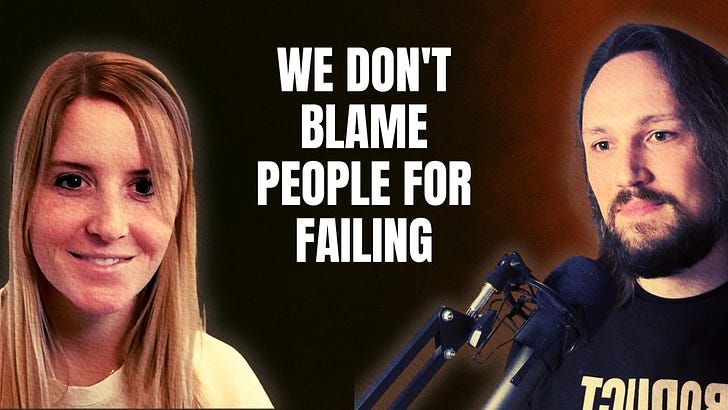

Guest
Product designer with 12 years of experience turning complex ideas into impactful products. He’s worked on everything from fintech systems to AI-powered health tools and e-commerce growth. With a mix of tech and communication skills, Toms loves solving tricky problems, running workshops, and learning about everything from design and engineering to economics, philosophy, and music.
Toms is a former colleague of mine from Kinsta. When I invited him on the show, I wanted to understand what’s actually happening in the design world with all these AI tools. Engineers have Cursor and Copilot. What do designers have? And more importantly, is anyone actually excited about it?
The Useful Parts
Toms uses ChatGPT constantly, but not in the way the marketing would have you believe. He’s not generating entire design systems from a single prompt.
“It’s very useful to use ChatGPT to start out anything because if you’re starting a project from zero, there’s always some kind of information available. You can put that together with your brain dump into GPT and it will make some kind of sense of your thoughts, give you some more accurate wording.”
The key word there is “start.” He takes the output and thinks through it again. Copy-paste answers don’t work because every product is different.
What I found most interesting was his habit of asking for contrarian opinions:
“What I keep doing a lot is when you ask anything to ChatGPT, it’s very good to ask for the contrarian opinions, the ones that are outside of the boundaries. It allows you to check how far your basic understanding is from the edges.”
That’s a trick I’m stealing immediately.
Where Did All the Wireframes Go?
I asked Toms about low-fidelity prototypes. You know, the black and white sketches meant to isolate the user journey from visual distractions. With tools like Lovable and V0 generating polished UIs instantly, does anyone wireframe anymore?
“I haven’t seen much wireframing recently, and I haven’t also myself done much of wireframing.”
Here’s the problem. When you show stakeholders something that looks finished, they focus on the wrong things. Toms shared a trick he used to use: deliberately making the UI horrible so stakeholders would focus on the flow instead.
“If you come too early with a thought, with an idea laid out, but specifically made the UI horrible to look at so that idea would be on the flow. And that now distracts from the problem because now you design high fidelity.”
But if you go too rough, they think you haven’t put in effort. It’s a losing game either way.
Generative Mediocrity
We did a live demo comparing Lovable and V0. I gave both the same simple prompt: “A landing page for the product engineers community to gather emails.”
The results were fine, and that’s exactly the problem.
Toms coined a term that stuck with me: generative mediocrity.
“It takes the average of everything. But if you look at any SaaS website, Lovable for example, it is fine tuned. There’s all kinds of small touches that technically, practically are not important from a technical aspect, but from the human perception aspect, those little details, that craft aspect, is what creates trustworthiness into the product.”
The AI gives you the average of what exists on the internet, which means it’s not bad, but it’s not distinctive either.
I showed Toms a job board I’d been working on. It took 43 iterations to get something that actually felt right. The difference? I fed it my brand guidelines, mood boards, and specific visuals. Context matters enormously.
“This feels like massaged. It feels like someone has put in effort into making this happen.”
That’s what 43 iterations buys you. Not a magic prompt.
The Excitement Question
I asked directly: are designers excited or anxious about these tools?
Toms didn’t sugarcoat it:
“I have not really seen designers really celebrate. Those who celebrate, I’ve noticed, are very focused on the website creation side.”
Marketing websites? Great use case. You need vibes, you need directions, AI can generate lots of options. But product design is different. Every input field, every button connects to backend services that took time to develop. You can’t just generate frontends and connect them to backends easily.
He told me about a previous company that tried using AI tools for landing pages. The first draft was great. Then they made edits and it started losing context. When developers looked at the generated code?
“They’re like, we can, but it might be easier and more maintainable if we just rewrite it, but we can use this as a reference.”
So much for replacing the team.
Everyone’s Stepping on Everyone’s Toes
We got into the bigger picture. Roles are blurring. PMs want to prototype without waiting for engineers. Designers want to ship without handoffs. Engineers want to understand business impact.
“I feel like design is kind of merging with project management or product management always wants to move into other spaces.”
I shared my take: AI just made it clear that everyone wanted to do more than they were allowed to do before. PMs were blocked by slow prototyping. Designers were stuck being pixel monkeys. Engineers were code monkeys. Everyone was frustrated by the assembly line.
If code becomes a commodity and anyone can create designs and PRDs, does that mean we’re supercharging individuals at the expense of others? Or does it let us test more ideas?
“The current trend that we have seen is that AI is used kind of as excuse to downsize company, to keep the company lean and make it more efficient instead of expanding outwards, which is the original promise of AI.”
That’s the uncomfortable observation. The marketing says “do more.” The reality seems to be “do the same with fewer people.”
The Question Nobody’s Answering
Toms left me with something I’ve been thinking about since:
“In the end, who will pay you for your product? Are you solving a customer problem? Do your customers even have this problem? Are they willing to pay for this problem?”
You can vibe code an app in a day and get to the project graveyard 99% faster than before. But the fundamental questions don’t change: does someone want this, and will they pay for it?
We can build faster, but we still have to figure out what to build. That’s why thinking in experiments rather than features matters more than ever.